

How a Professional Turf Management Company Fertilizes Your Lawn
Healthy turf depends on more than applying products every few months. Fertilization is effective only when timing, product selection, soil health, weather conditions, and turf biology are evaluated in conjunction. This is why professional turf management companies rely on trained technicians, specialized tools, and structured programs built on agronomic research. Homeowners rarely see this process in action, yet it is the reason professional fertilization produces results that inconsistent or DIY methods cannot match.
Professional lawn care is not a single action. It is a system that examines what is happening in the soil, how the turf is responding, and what the climate is about to do. Companies like Turf Magic use this information to determine what to apply, how much to apply, and how to apply it safely and effectively.
Below is a detailed look at how turf management professionals fertilize lawns and why this process delivers stronger, greener, and more resilient turf.
A Professional Begins With an Evaluation, Not a Product
A technician’s first responsibility is to understand what the lawn needs. Fertilizer never comes first. Diagnosis comes first.
A trained turf specialist evaluates:
· Grass type (Bermuda, Zoysia, Centipede, St. Augustine)
· Soil composition (clay density, compaction, sand content)
· Soil pH (nutrient availability depends on correct acidity/alkalinity levels)
· Color and density (indicators of nutrient deficiency or stress)
· Thatch depth
· Shade conditions
· Moisture levels
· Disease or pest pressure
· Weed competition
Modern turf management uses agronomic principles. Soil pH affects nutrient uptake. Density influences how well fertilizer moves into the root zone. Weather patterns influence how quickly turf can absorb nitrogen. These details shape the plan before any fertilizer is selected.
At Turf Magic, this evaluation repeats at every visit. Conditions shift throughout the year, and a fertilization plan must adapt accordingly.
Why Product Selection Is More Technical Than Most Homeowners Expect
Big-box stores offer bags of fertilizer with a simple set of three numbers. These numbers represent the amounts of nitrogen, phosphorus, and potassium (N-P-K). Professional turf management requires more detail.
A technician determines:
1. The Correct Nutrient Ratio
Bermuda responds best to nitrogen-heavy summer blends. Zoysia prefers moderate nitrogen to avoid thatch production. Centipede requires low nitrogen to prevent stress. St. Augustine requires carefully balanced feeding to avoid excessive growth, which can increase disease vulnerability.
Applying the wrong N-P-K ratio can weaken turf—something many homeowners do not learn until damage is visible.
2. Whether Micronutrients Are Needed
Professionals often supplement with:
· Iron (deepens color without overstimulating growth)
· Magnesium
· Manganese
· Sulfur
· Zinc
These improve lawn color and health but must be applied at controlled levels.
3. Granular vs. Liquid Fertilizers
Professional-grade fertilizers are formulated for predictable release rates, controlled uptake, and compatibility with herbicides.
Selecting the wrong product for the season or turf type can cause uneven color, burning, thatch buildup, or weak root systems. This concern is why professional turf managers rarely use generalized, store-bought products.
How Professionals Decide Between Granular and Liquid Fertilization
Both granular and liquid fertilizers are essential in professional turf care. The choice depends on turf health, season, soil moisture, and the goals of each visit.
Granular Fertilizer
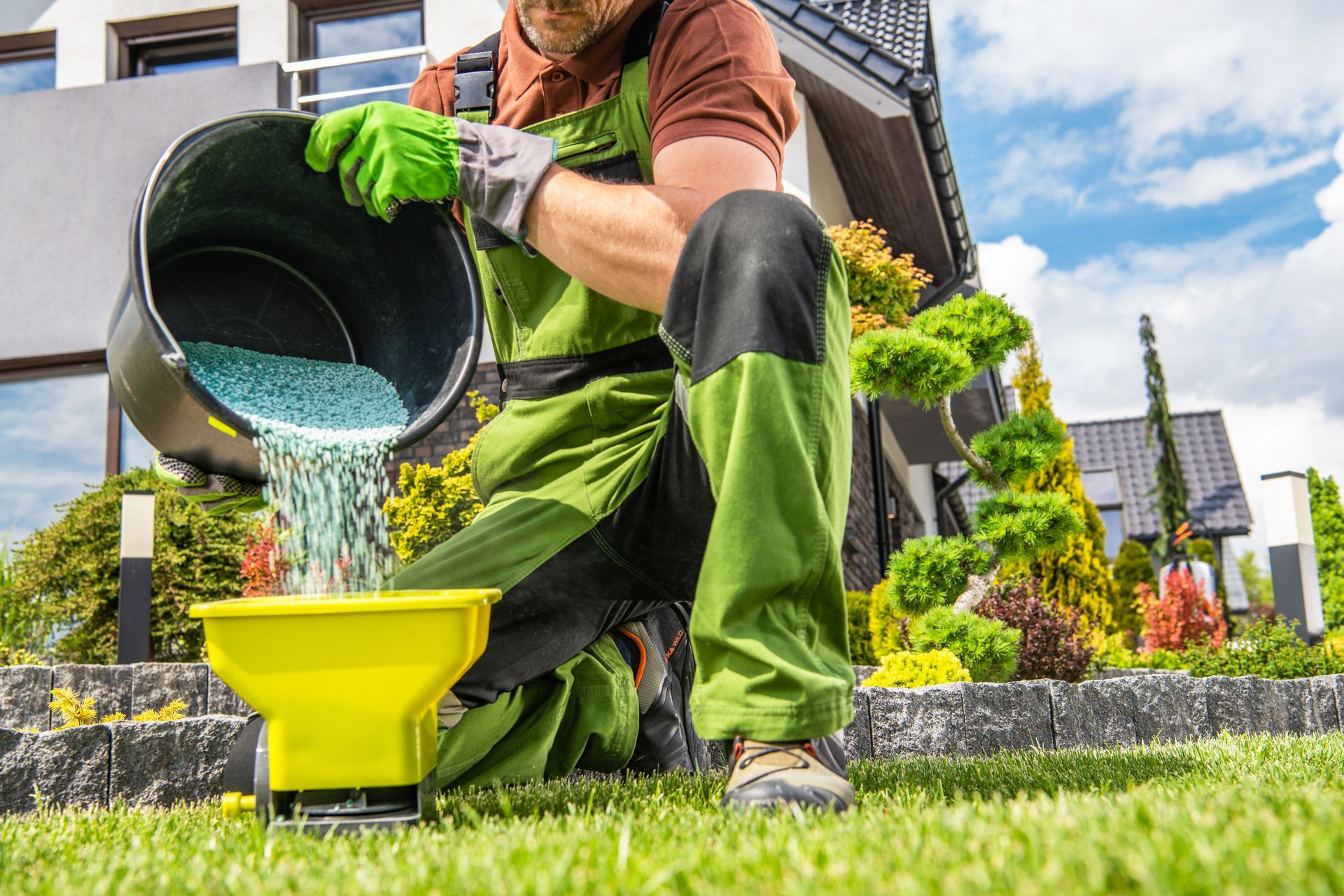
Granular fertilizer releases nutrients slowly and predictably. It works well during stable growing periods. Professionals choose granular products when they want a steady nutrient supply over several weeks.
Granular fertilizer benefits include:
· Longer duration
· Less risk of nutrient shock
· Consistent feeding during warm-season growth
· Better efficiency in summer when turf actively absorbs nutrients
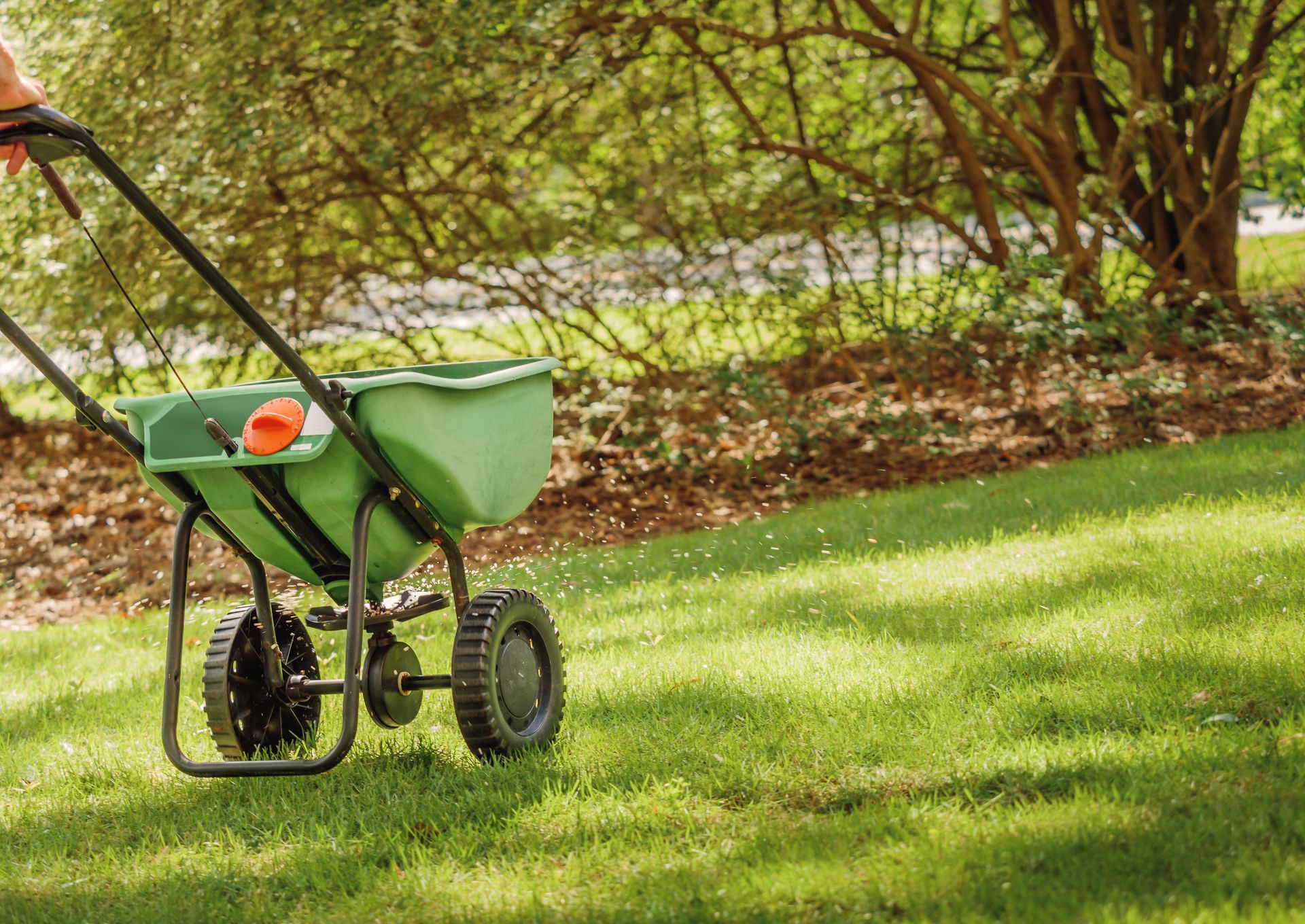
Professionals calculate the spread rate precisely. A technician measures walking speed, spreader calibration, and turf conditions to ensure the correct pounds-per-thousand-square-feet application. This accuracy prevents nutrient overload or thin areas caused by underapplication.
Liquid Fertilizer
Liquid fertilizer is absorbed more quickly. Professionals use it when turf needs a fast nutrient boost or during seasonal transitions.
Liquid products are ideal for:
· Early-season green-up
· Addressing visible nutrient deficiencies
· Supporting growth during stressful weather periods
· Achieving uniform color quickly
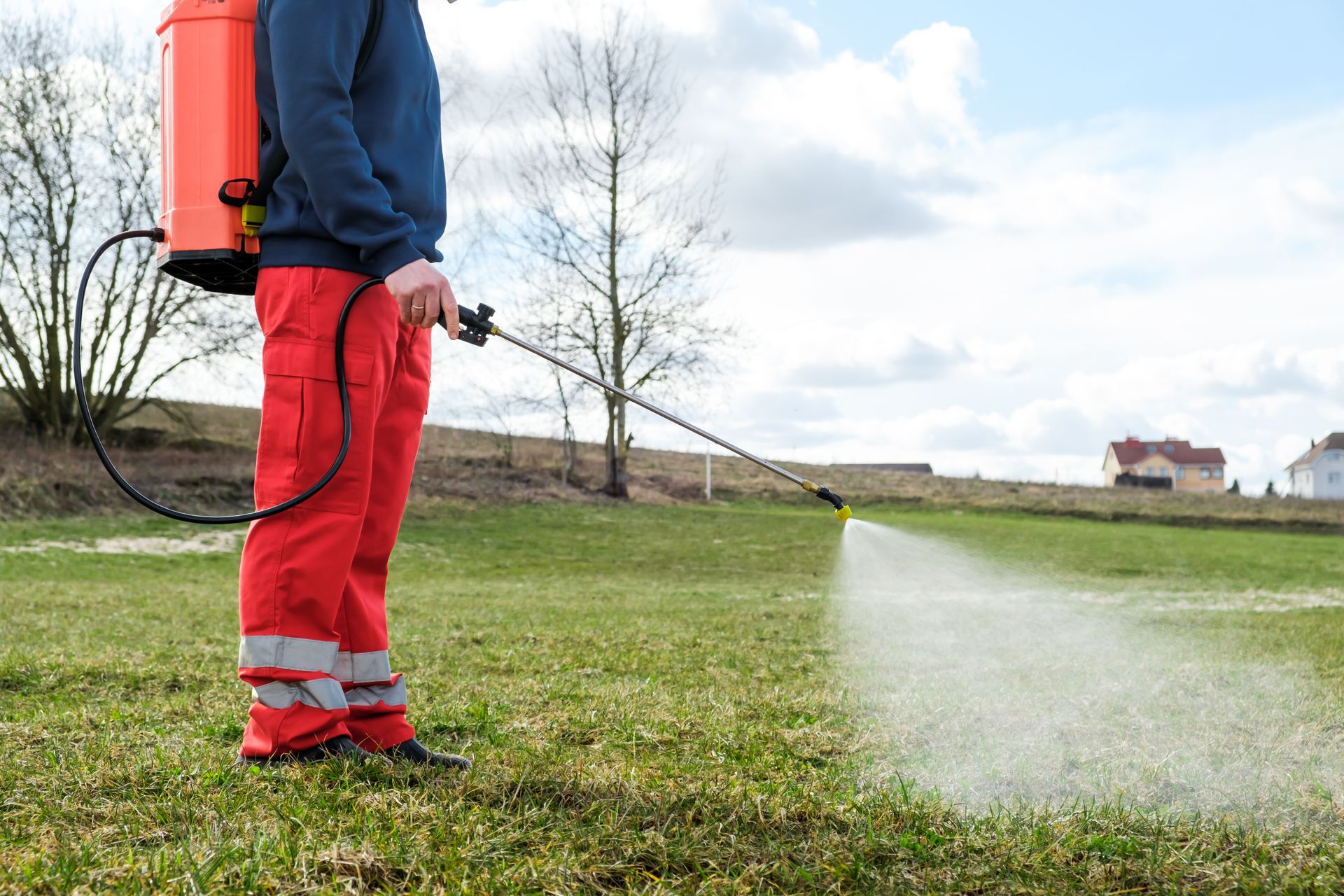
Liquid applications require training to prevent scorching, overlapping lines, or chemical imbalance. The spray pattern and pressure must be controlled precisely. A homeowner sprayer cannot achieve this consistency.
Some Fertilizers Must Be Watered In, and Why Professionals Manage This Carefully
Not all fertilizers require watering, but many must be watered in to activate nutrients and move them to the root zone.
Primary reasons for watering-in include:
· Triggering nutrient release: Granular products often rely on soil moisture to dissolve and enter the soil profile.
· Protecting the turf: Fertilizer left on the surface during hot weather can burn the blades.
· Ensuring even absorption: Moisture moves nutrients evenly into the soil, allowing the lawn to develop consistent color and density.
Professional turf managers consider weather forecasts, soil moisture, irrigation system performance, and turf stress levels when determining whether a product requires watering-in. They also advise homeowners when watering is not recommended—for example, when heavy rainfall is expected, which can wash away nutrients.
This judgment call is critical. Too much water causes nutrient leaching. Too little prevents activation. Timing the watering properly is one of the reasons professional fertilization produces more predictable results than DIY methods.
Application Technique: The Professional Difference
Professional turf application is a controlled and methodical process.
Spreaders and Sprayers
Technicians use calibrated equipment:
· Ride-on sprayer/spreader machines
· High-precision hose-end sprayers
· Large-capacity broadcast spreaders
Each is adjusted for:
· Ground speed
· Pressure
· Flow rate
· Spread pattern
· Product density
Calibration is essential. Even a slight deviation can double or halve the application rate. Overapplication can scorch turf. Underapplication reduces color and density. Homeowners rarely have the tools to calibrate equipment with professional precision.
Coverage Patterns
Professionals avoid uneven feeding by applying products in controlled passes that overlap consistently. They also adjust patterns for slopes, shaded areas, compacted soil, and problem zones.
Technicians know that certain areas require more or less product based on microclimates—something most homeowners are unaware of.
The Turf Magic Approach: Where Expertise Meets Local Knowledge
Turf Magic utilizes a structured 8-visit program tailored to Middle Georgia conditions. Each step supports the next. Fertilization is paired with pre-emergent, post-emergent, and soil-correction treatments to maintain stable turf throughout the year. The sequence includes:
· Winter and spring weed prevention
· Spring green-up and early fertilization
· Iron-rich feeding during early growth
· Summer fertilization for density and root strength
· Late-season pre-emergent protection
· pH correction with lime
· Final weed control before winter
This brief overview illustrates the timing, but the real value lies in interpretation—knowing when to adjust due to shifts in rainfall, changes in heat stress that alter nutrient requirements, or when soil pH indicates the need for a different mixture.
Professionals do not follow a static formula. They follow a plan informed by measurement, observation, and experience.
Why Professional Fertilization Produces Stronger Lawns Than DIY Methods
DIY fertilizer programs often underperform because they rely on:
· Incorrect nutrient ratios
· Misjudged timing
· Uneven coverage
· Lack of soil testing
· Poor calibration
· Inconsistent product quality
· No weed control integration
· No pH management
· No seasonal adjustment
Professional turf managers prevent these issues because they treat fertilization as a continuous process rather than a one-time task.
This process is why homeowners see greener color, fewer weeds, and stronger roots under professional care. The difference is not the product alone. It is the analysis, timing, equipment, and expertise behind every application.
Let Turf Magic Fertilize Your Lawn the Right Way
If you want consistent color, healthy density, and dependable seasonal performance, Turf Magic can help. Our technicians evaluate soil health, turf conditions, and weather patterns before every application. You receive fertilization that is timed correctly, measured precisely, and designed specifically for Middle Georgia turf.
Request a Free Quote: 478-347-0398
Your lawn grows better when it is managed by professionals who understand what it needs and when it needs it.