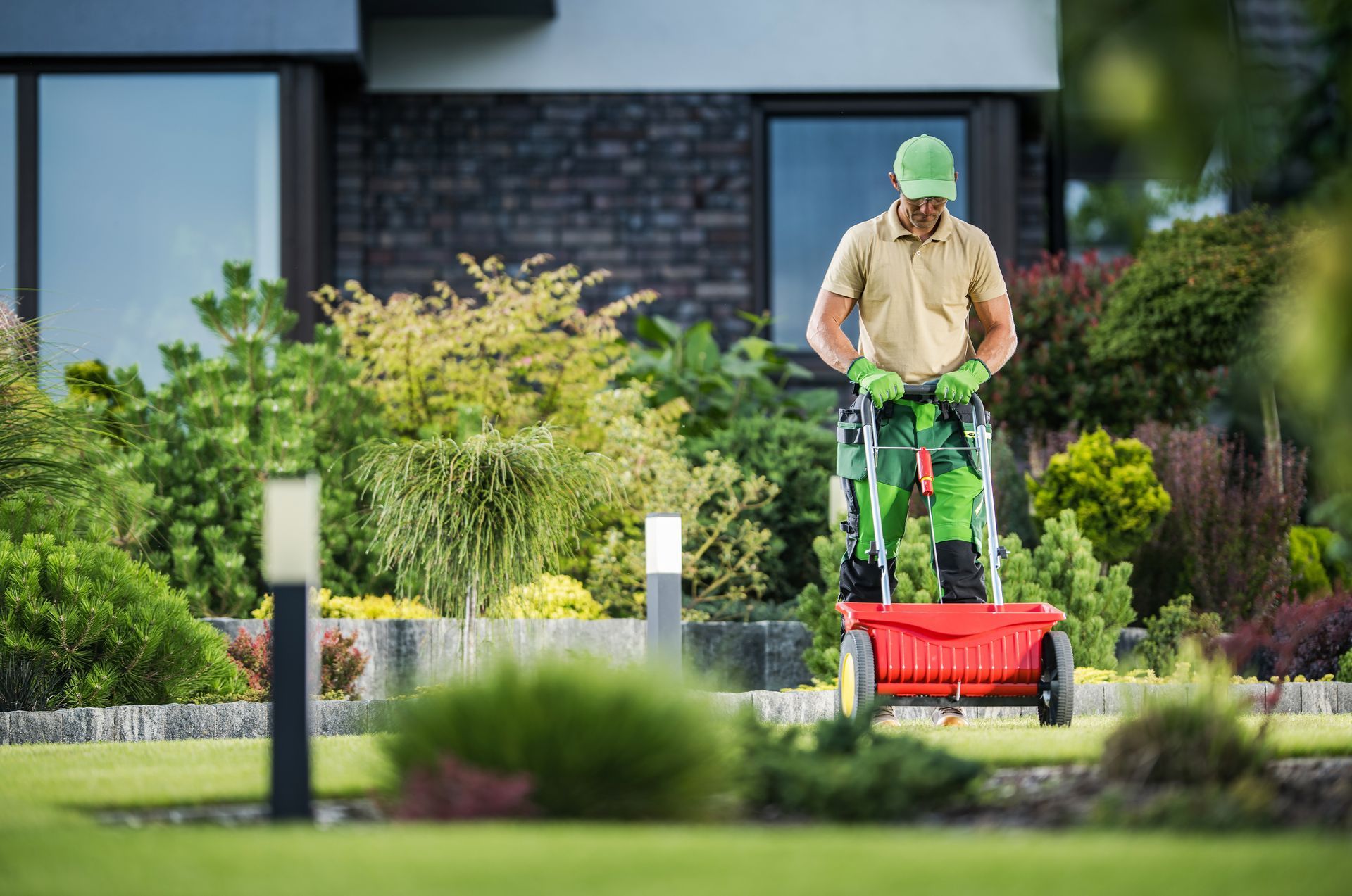



8 Steps to Greener Grass: How Often Pros Fertilize Your Lawn
Nutritionists will tell you that you need to tailor your meals to the time of day. A hearty breakfast fuels the morning, a balanced lunch sustains the afternoon, and a lighter dinner supports rest and recovery. Your lawn responds to nutrition in much the same way. Grass has different needs as temperatures change, growth speeds up, and stress levels rise.
This is why professional lawn care does not rely on constant fertilizing or monthly guesswork. Instead, it follows a seasonally structured plan that delivers nutrients at specific intervals, aligned with how warm-season grasses grow in Middle Georgia. When homeowners ask how often to fertilize lawn areas for the best results, the professional answer is not every few weeks or only once or twice a year. It is a deliberate, eight-step process spaced about six to eight weeks apart, with each visit serving a clear purpose.
Below, we walk through the eight steps Turf Magic uses and explain why each application matters.
Why Professional Fertilization Follows a Structured Schedule
Warm-season grasses like Bermuda, Zoysia, Centipede, and St. Augustine grow in predictable cycles. They wake up slowly in spring, surge during summer, recover in early fall, and rest through winter. Fertilizer supports those cycles, but timing matters just as much as the product itself.
Professionals space treatments six to eight weeks apart because this window allows nutrients to be absorbed, used by the plant, and gradually depleted without overwhelming the turf. This approach creates steady improvement while avoiding excessive growth, stress, or nutrient loss.
Rather than dozens of visits, pros rely on fewer, better-timed applications that build on one another.
Step 1: Late Winter Weed Prevention and Early Correction
Timing: January to February
The first step sets the foundation for the entire year. Even though grass is dormant, weeds remain active below the surface. A late winter pre-emergent application creates a barrier that prevents early broadleaf weeds from germinating.
At the same time, a post-emergent treatment addresses any visible winter weeds that have already taken hold. This keeps competition low as soil temperatures begin to rise.
This visit focuses on preparation rather than growth, which is a key reason professionals fertilize less often than many homeowners expect.
Step 2: Early Spring Weed Defense Before Growth Begins
Timing: February to March
As temperatures climb, spring weeds become more aggressive. Crabgrass and other warm-season weeds begin preparing to emerge. A second pre-emergent application strengthens protection during this critical transition.
Post-emergent control continues as needed to keep the lawn clean while turf is still waking up. Fertilizer is typically minimal or absent here, since grass is not yet ready for strong feeding.
This step protects future growth rather than forcing early color.
Step 3: First Fertilization for Spring Green-Up
Timing: March to April
Once warm-season grass begins active growth, professionals introduce the first fertilizer of the year. This application supports early green-up and helps the lawn transition out of dormancy.
Nitrogen is present but controlled, encouraging steady color and leaf development without pushing excessive top growth too early. The goal is even coverage and gradual improvement, not a sudden flush of growth.
This is often the first time homeowners notice visible change.
Step 4: Color Enhancement and Continued Growth Support
Timing: April to May
By mid-spring, grass is actively growing and able to use nutrients efficiently. This visit often combines iron-rich fertilizer with additional weed prevention.
Iron enhances color without accelerating growth, which helps lawns look greener while maintaining balance. Another layer of pre-emergent protection keeps summer weeds from gaining a foothold as temperatures rise.
This step reinforces density and appearance heading into the most demanding part of the season.
Step 5: Summer Fertilization for Density and Root Strength
Timing: June to July
Summer places the greatest demands on turf in Middle Georgia. Heat, humidity, and frequent mowing increase stress. Professional fertilization during this period focuses on both top growth and root development.
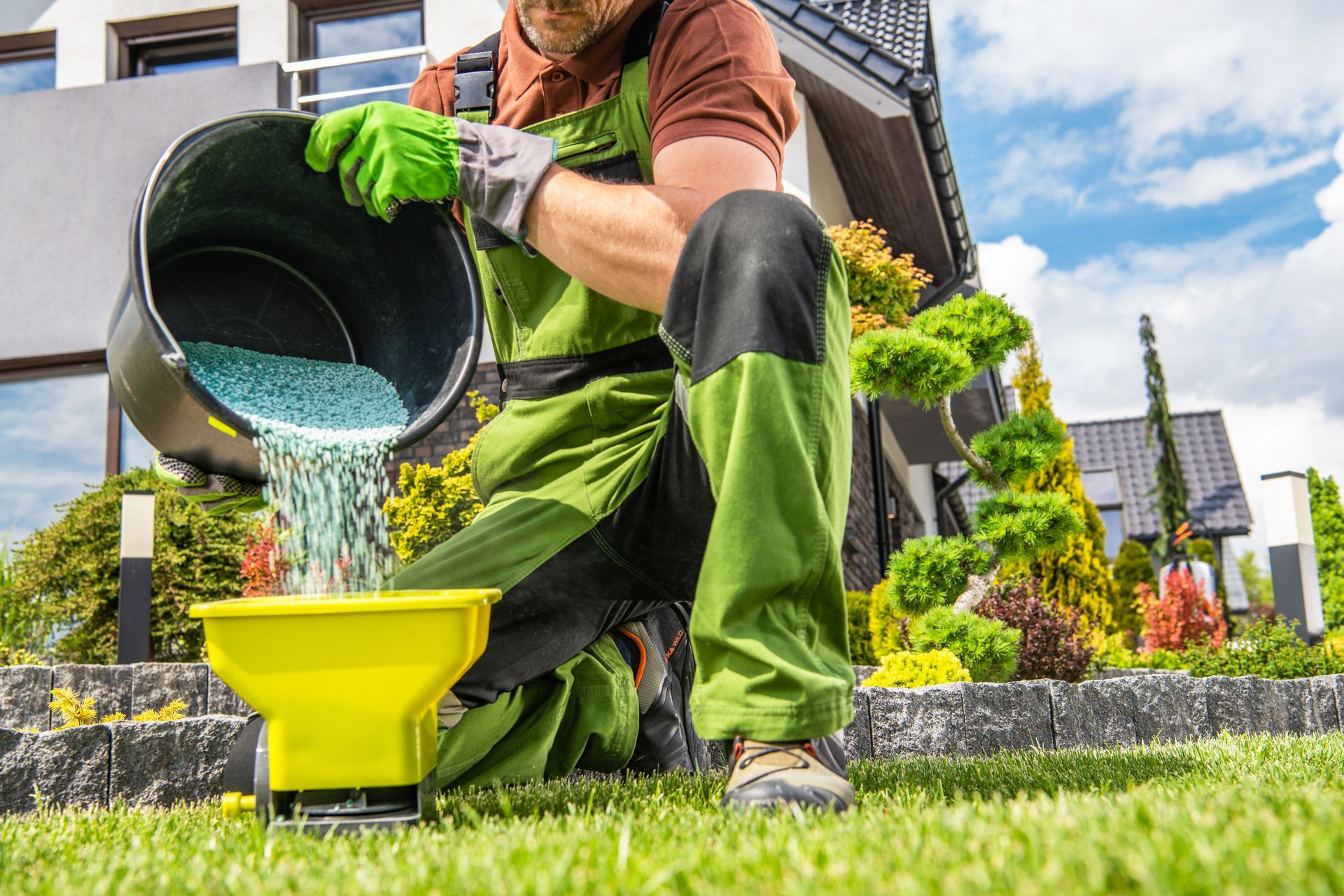
A balanced fertilizer containing nitrogen, phosphorus, potassium, and iron supports thick turf and strong roots. Slow-release formulations are commonly used so nutrients feed the lawn steadily through peak growth.
Spacing this application six to eight weeks after the previous visit prevents nutrient overload while maintaining momentum.
Step 6: Late Summer Weed Prevention for Fall and Winter
Timing: August to September
As growth begins to slow, professionals shift focus back to prevention. A targeted pre-emergent application helps stop winter weeds, especially Poa annua, before they germinate.
This step is often overlooked in DIY programs, yet it plays a major role in how clean a lawn looks through fall and early spring. Fertilizer may be minimal here, depending on turf condition and weather patterns.
The goal is protection and preparation rather than pushing growth.
Step 7: Soil pH Correction for Better Nutrient Uptake
Timing: October to November
Healthy lawns depend on proper soil pH. In Middle Georgia, clay-heavy soils often drift out of the optimal range for nutrient absorption. A lime application helps restore balance.
Correct pH allows grass to access nutrients already in the soil and those applied earlier in the year. This step improves the effectiveness of the entire program, even though it does not create immediate visual change.
Professionals include this visit to support long-term health, not short-term color.
Step 8: Winter Weed Control to Close the Year
Timing: November to December
The final step of the program prepares the lawn for dormancy and the following spring. Pre-emergent and post-emergent treatments address winter weeds and reinforce protection through the cold months.
By maintaining a consistent schedule, professionals prevent gaps in coverage that allow weeds to establish during winter. This makes spring green-up cleaner and more uniform.
This visit completes the annual cycle and sets the stage for the next year’s success.
How Often to Fertilize Lawn Areas for Lasting Results
When homeowners ask how often to fertilize lawn spaces, the professional answer is not monthly or weekly. It is about eight well-timed visits per year, spaced six to eight weeks apart, with fertilizer applied only when grass can use it effectively.
This approach limits unnecessary applications, reduces waste, and supports steady improvement. Each step builds on the previous one, creating cumulative benefits rather than quick spikes followed by setbacks.
Why Fewer, Smarter Applications Outperform Frequent Treatments
Professional lawn care focuses on precision and timing. Frequent fertilization can lead to rapid growth, shallow roots, and increased stress during heat or drought. Fewer, targeted applications encourage balanced growth and resilience.
Licensed technicians also adjust products based on weather, turf condition, and soil response. This flexibility allows them to maintain results without increasing visit frequency.
The outcome is a lawn that improves steadily through the seasons without constant disruption.
Consistency Creates Greener Grass Over Time
Greener grass is rarely the result of a single product or visit. It comes from a structured program that respects how grass grows and responds to its environment. By following an eight-step schedule, professionals deliver nutrients when they matter most and avoid unnecessary treatments when they do not.
For homeowners wondering how often to fertilize lawn areas in Middle Georgia, the answer lies in consistency, timing, and a clear plan. A measured approach produces healthier turf, fewer weeds, and results that last from one season to the next.
If you want to learn more about how a professional fertilization schedule could support your lawn, Turf Magic is always available to answer questions and provide guidance tailored to your property.
Request a Free Quote and Let Turf Magic Give Your Grass the Right Diet at the Right Time: 478-347-0398
Your lawn grows better when it is managed by professionals who understand what it needs and when it needs it.